
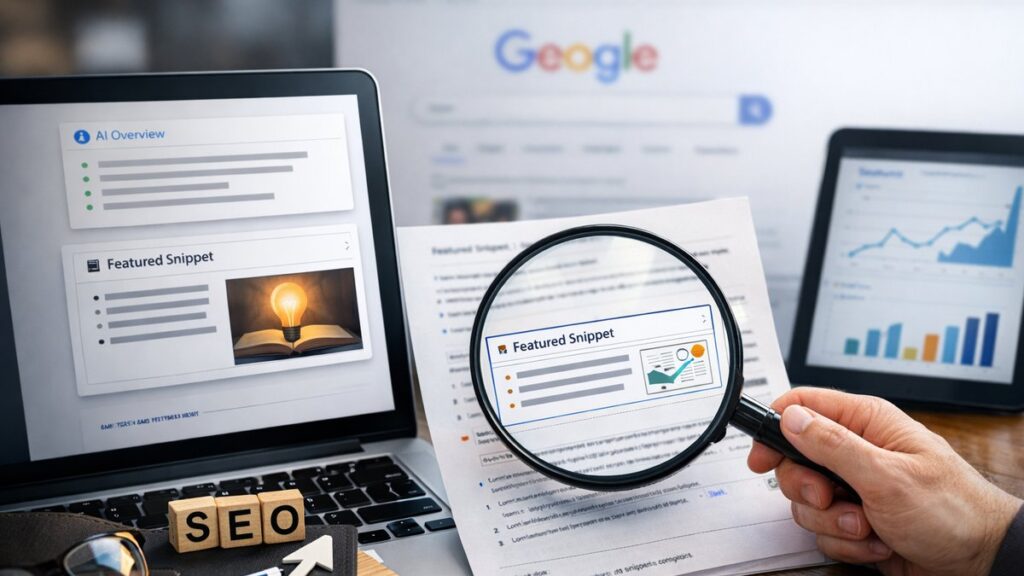
Appearing at the very top of a search results page — before any traditional blue links — is no longer a matter of luck. Featured snippets optimization, along with a strategic approach to AI overviews and People Also Ask boxes, has become one of the most powerful levers in modern search visibility. These answer positions deliver authority, trust, and exposure even when users never click through. If you want to dominate the top of the SERP, understanding how to structure and target content for these formats is essential. For a broader strategic foundation, explore the full answer engine optimization guide before diving into the tactics below.
Types of answer box positions worth targeting
Not all answer positions work the same way. Each format is triggered by different query types and requires a distinct content structure to win.
| Position type | Triggered by | Content format needed |
|---|---|---|
| Featured snippet (paragraph) | Definition or explanation queries | Concise 40–60 word answer below a heading |
| Featured snippet (list) | How-to and step-by-step queries | Numbered or bulleted list with clear items |
| Featured snippet (table) | Comparison and data queries | HTML table with labeled rows and columns |
| People Also Ask box | Related follow-up questions | Short Q&A blocks matching the question exactly |
| AI overview (generative) | Broad informational and multi-part queries | Authoritative, well-structured, cited content |
Query types most likely to trigger featured snippets
Certain search intents consistently produce answer box results. Prioritizing content around these query patterns gives you the highest probability of capture.
High-trigger query patterns
- ❓ “How to…” instructional queries
- 📋 “What is…” definition queries
- ⚖️ “X vs Y” comparison queries
- ✅ “Best way to…” recommendation queries
- 🔢 “How many…” or “How much…” quantity queries
Low-trigger query patterns
- Navigational queries (brand names)
- Transactional queries (“buy…”, “price of…”)
- Highly ambiguous single-word searches
- Local intent queries without informational context
Formatting tactics for featured snippets optimization
Winning a featured snippet is largely a formatting challenge. Google extracts structured, scannable answers — so the way your content is arranged matters as much as what it says. Learn more about how to format content to capture featured snippets in depth.
Paragraph snippet tactics
- Place a direct, self-contained answer in the first 60 words after a relevant H2 or H3 heading
- Mirror the exact phrasing of the target query in your heading
- Avoid filler phrases like “In this article…” before the answer
- Use plain language — snippets favor clarity over complexity
List and step-format tactics
- Use numbered lists for sequential processes; bulleted lists for non-ordered collections
- Keep each list item under 10 words where possible
- Include between 5 and 8 items — Google typically displays this range
- Add a brief sentence before the list that frames the topic as a direct answer
Table snippet tactics
- Use proper HTML table markup with clear header rows
- Label columns and rows with descriptive, keyword-relevant text
- Limit tables to two or three columns for readability in snippet format
Optimizing for People Also Ask boxes
People Also Ask (PAA) boxes expand dynamically as users click, generating an almost unlimited chain of related questions. Appearing in multiple PAA entries for a single topic cluster significantly multiplies your SERP footprint. Explore a full tactical breakdown on optimizing for People Also Ask boxes at scale.
How to structure content for PAA
- Research PAA questions that already appear for your primary keyword using SERP analysis tools
- Create dedicated H2 or H3 headings that match the exact wording of those questions
- Follow each heading with a 40–60 word direct answer
- Expand with supporting detail below the direct answer — this satisfies both PAA extraction and deeper reader engagement
- Cluster related questions within the same article to increase the probability of multiple PAA appearances
Getting cited in Google AI overviews
AI-generated overviews synthesize answers from multiple trusted sources. Being cited in these generative results requires a different approach than traditional snippet targeting. For a dedicated strategy, read the guide on getting your content cited in Google AI overviews.
Key signals that influence AI overview citations
Content signals ✅
- Comprehensive topic coverage with logical structure
- Clear authorship and demonstrated expertise
- Factual accuracy with verifiable claims
- Structured data markup (Schema.org)
- Content that directly answers multi-part queries
Technical signals ✅
- Fast page load and Core Web Vitals compliance
- Clean semantic HTML structure
- Strong internal linking to related authoritative content
- Consistent E-E-A-T signals across the domain
- High-quality backlink profile from relevant sources
How Draftto structures articles to win answer positions
Manually engineering every article for featured snippets, PAA boxes, and AI overviews is time-intensive and easy to get wrong. Draftto automates this process by analyzing the SERP for your target keyword and generating article structures that align with the exact formats search engines extract answers from.
What Draftto does automatically
- Detects which snippet format (paragraph, list, or table) is most likely to be triggered for your keyword
- Places direct answer blocks immediately after question-format headings
- Generates PAA-aligned H2/H3 sections based on real SERP question clusters
- Applies semantic structure and Schema-ready formatting throughout each article
- Ensures content depth and E-E-A-T signals are consistently embedded — not added as an afterthought
The result is content that is structurally ready to be extracted by Google’s answer systems from the moment it is published — without requiring manual reformatting or post-publish optimization cycles.
From answer visibility to brand authority
Capturing featured snippets and AI overview citations does more than drive impressions — it positions your brand as the authoritative source in your niche. Even when users do not click through, repeated exposure at the top of the SERP builds recognition and trust at scale. This is the strategic value of featured snippets optimization: zero-click visibility is not a loss — it is a brand-building asset. Discover how to maximize this advantage by turning zero-click visibility into brand authority.